Case study
Industry
Healthcare Microlearning Examples: Clinical, Staff and Patient Education
If you are evaluating a healthcare microlearning platform for employees, start with the content: short, accurate, scenario-based modules that clinicians and staff can finish between shifts. The examples below are real projects for HPNA, EmPRO, NYU Langone, Somatus, and others, covering clinical education, staff training, patient education, and AI video experiments.
Healthcare microlearning examples
15 videos. Click any card to play it here.
Case study
HPNA: Modern, Interactive Microlearning for Hospice & Palliative Nursing Education | Case Study
Case study
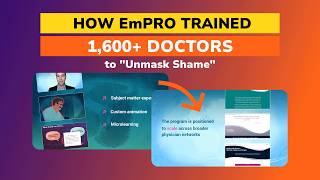
How EmPRO Trained 1,600+ Doctors to "Unmask Shame"
Example
Medical Training Example with Engaging Articulate Rise 360 Incorporating Level 2 Interactivity
Example
Patient Education Microlearning: 8 Examples That Drive Real Behavior Change in Healthcare
Case study
Navigating Medical Self-Injections: Defy Medical's Patient Education Training Success Story Example
Case study
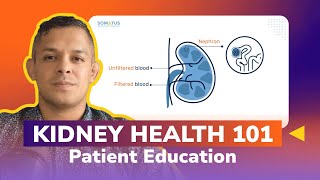
Understanding Kidney Health 101: Somatus's Engaging Patient Education Training Success Story
Example
Microlearning Animated Example Mental Health Education
Example
Client Onboarding Microlearning Training Example for the Health Industry | Explainer Video
Example
Microlearning Tutorial: Software Training Example for the Healthcare Industry
Experiment
Best AI Video Generators for Patient Education Cases
Experiment
Creating Microlearning with Synthesia: Healthcare Education Example
Experiment
Google Veo for Patient Education Microlearning: AI Video Creation Step-by-Step
Example
Technical Training Example for Medical Industry | SSCT
Example
Patient Education Training Example for Medical Industry | SOMATUS
Why does microlearning work in healthcare?
Microlearning works in healthcare because clinicians and staff learn in fragments of time: before a shift, between patients, or on a phone in the break room. Short modules with one clear objective fit those gaps, and scenario-based design lets people rehearse clinical judgment and communication without putting a patient at risk.
Healthcare learning has two requirements most industries can relax. Content must be clinically accurate, and it must carry the right emotional tone, because the topics often involve fear, pain, grief, or shame. A cheerful animation about end-of-life care fails as surely as an inaccurate one.
Microlearning helps with both. Smaller modules are easier for clinical reviewers to check line by line, and easier to update when guidelines change. A focused scenario also gives you room to show empathy in action, which is hard to do in a slide-heavy course.
What should a healthcare microlearning platform for employees include?
A healthcare microlearning platform for employees needs three things: content clinicians trust, delivery that works on mobile between shifts, and tracking that satisfies compliance, credentialing, and CE requirements. The platform itself is usually an LMS you already own. The difference between programs that get used and programs that get ignored is the design of the modules inside it.
We are technology-agnostic. We publish Articulate Storyline and Rise 360 courses as SCORM or xAPI packages so they run in the system your organization already uses. When evaluating your setup, check that it supports mobile playback, completion tracking per module, CE or CME certificates where needed, and easy content replacement so updates do not require a rebuild.
What to notice in these healthcare microlearning examples
The best healthcare examples above share a pattern: they mirror real clinical moments, use expert voices clinicians recognize, and keep each module focused on one behavior. Look at how each project handles tone as carefully as accuracy, especially on sensitive topics such as serious illness, shame, and self-injection.
- HPNA Palliative Care Basics. The Hospice and Palliative Nurses Association needed standardized onboarding for new clinicians across the country. The scenario-based series was built for busy clinicians working between shifts and saw a 1,573% increase in utilization with 90% learner satisfaction.
- HPNA in Rise 360. A useful build reference: Rise courses with Level 2 interactivity, a stylized interface, infographic motion graphics, live-action video, and embedded Storyline files.
- EmPRO, Unmasking Shame. A CME-accredited course helping physicians recognize and manage shame in clinical settings. SME-led video and custom animation mirror real situations. Over 1,600 physicians completed it, with confidence rising 15 to 18 percentage points across nine competencies.
- Defy Medical. Step-by-step videos that walk patients through self-administering injections, a task many find intimidating. Clear sequencing and a calm tone do most of the work.
- Somatus, Kidney Health 101. Patient education for people with chronic kidney disease and end-stage renal disease, simplifying complex medical information into short, approachable videos.
Read the full HPNA case study and EmPRO case study for design details.
Common healthcare microlearning use cases
Healthcare organizations use microlearning for four main audiences and goals: clinical education for licensed professionals, onboarding and role training for staff, compliance refreshers, and patient education. Each needs a different format, level of interactivity, and review process, summarized in the table below.
| Use case | Audience | Typical format | Typical length |
|---|---|---|---|
| Clinical education and CE | Nurses, physicians, allied health | Scenario-based video with knowledge checks | 5 to 15 minutes per module |
| Staff onboarding | New clinicians and support staff | Rise or Storyline series with live-action and animation | 3 to 10 minutes per module |
| Compliance refreshers | All staff | Short scenarios with decision points | 2 to 5 minutes |
| Patient education | Patients and caregivers | Animated explainer or step-by-step video | 1 to 3 minutes |
| Software and process training | Clinical and admin users | Screencast plus motion graphics | 1 to 3 minutes |
Lengths are general guidance. For patient-facing content, see our patient education video examples, and for required training, our compliance training microlearning examples.
Can AI video tools speed up healthcare microlearning?
AI video tools can speed up healthcare microlearning production, but they do not replace instructional design or clinical review. In our experiments, AI handled presenter-led and illustrative content quickly, while accuracy, tone, and empathy still depended on the script, the learning outcomes, and careful human review before anything reached patients or staff.
We tested this directly. In one experiment we recreated the same patient education video five ways (traditional motion graphics, Synthesia, Google Veo, OpenAI Sora, and Adobe Firefly) and asked over 100 patient education leaders which would work in their organization. In two walkthroughs we built a post-surgical bruising module with Synthesia and with Google Veo, comparing each against a motion graphics version of the same topic.
The full findings are in our AI video for patient education experiment. The short version: realism can help or distract, and the tool matters less than the design decisions behind it.
Healthcare microlearning mistakes to avoid
The most common mistakes in healthcare microlearning are skipping clinical review until the end, mismatching tone to topic, and packing several objectives into one module. Others include using AI-generated visuals without checking anatomical or procedural accuracy and forgetting that many learners will watch on a phone, often without sound.
A short checklist:
- Get clinical sign-off on the script before visuals. Changing a script is cheap. Changing finished animation is not.
- Match tone to the emotional weight of the topic. EmPRO’s course worked because it treated shame seriously.
- One behavior per module. If a reviewer needs to approve three clinical points, build three modules.
- Design for mobile and captions. Clinicians often watch without audio.
- Plan updates. Note which modules depend on guidelines that change, and who owns the review.
How to get started
Start with one high-impact topic where you can measure a change: onboarding for a hard-to-staff role, a compliance topic with recurring errors, or a patient education task that drives calls or readmissions. Build a short pilot series, test it with real clinicians or patients, and use their feedback before scaling to a full program.
If your organization is a professional society offering CE, see our medical society and CE microlearning examples. Our step-by-step implementation plan covers scoping, review cycles, and launch.
What is the best healthcare microlearning platform for employees?
There is no single best platform. Most health systems and associations already own an LMS, and well-built microlearning runs in almost any of them when published as SCORM or xAPI. Choose the platform for tracking, mobile access, and integration with your HR or credentialing systems, then invest in the content, which is what clinicians actually experience.
How long should clinical microlearning modules be?
Short enough to finish on a break, usually a few minutes per module, with one clinical objective each. Longer topics become a series. HPNA's programs worked because clinicians could complete scenario-based modules between shifts, and the modules still added up to meaningful onboarding and continuing education when taken together.
Can AI video tools be used for patient education?
Yes, with care. We recreated the same patient education video with motion graphics, Synthesia, Google Veo, Sora, and Adobe Firefly, then asked over 100 patient education leaders which would work. AI speeds production, but every script and visual still needs clinical review for accuracy, tone, and empathy before it reaches patients.
How do you keep healthcare microlearning clinically accurate?
Accuracy comes from process. Subject matter experts approve learning objectives and scripts before any visuals are produced, then review storyboards and a near-final cut. Keeping each module to a single topic makes review faster and makes updates easier when guidelines change. Cite sources in the script so reviewers can check them quickly.
Does microlearning work for compliance training in hospitals?
It works well for compliance topics that require recall and correct action, such as infection prevention, safety procedures, and documentation steps. Short scenarios with decision points make the expected behavior concrete. Pair modules with spaced refreshers rather than one annual course, and confirm your LMS records completions the way auditors expect.
Work with us
Build clinical microlearning that holds up
Share the clinical, staff, or patient education topic you need to cover. We'll suggest a format, a review process, and examples that match your audience.
- Built by the team behind every example on this site
- Brandon Hall Group and ASAE award-winning work
- Associations, healthcare, nonprofits, and tech