








Case study
The Microlearning Lab
Microlearning Examples150+ Real Examples by Industry, Training Type and Format
These microlearning examples are real projects: short videos, interactive modules and simulations that Ninja Tropic produced for associations, medical societies, healthcare organizations, nonprofits and companies. Each one teaches a single skill or idea in a few minutes or less. Browse by industry, training type, format or tool, then study the case studies behind the results.
Updated October 2026
Real client projects2 to 7 minute modules
Trusted by teams at
Example library
24 microlearning examples worth studying first
Filter by industry, training type or format. Click any card to watch it here.
View all associations examples View all healthcare examples View all nonprofits examples View all safety examples View all onboarding examples View all compliance examples View all patient education examples View all ai examples
Case study
How to Create Engaging Safety Prototype Training with Storyline 360: ARA's Customer Success Story
Case study
How EmPRO Trained 1,600+ Doctors to "Unmask Shame"
Case study
How to create a Leadership Video Training with Storyline 360: USA Swimming's Customer Success Story
Example
Microlearning Tutorial: Software Training Example for the Healthcare Industry
Example
Microlearning Animated Example Mental Health Education
Case study
Diversity & Inclusion Corporate Training Video Examples: Camber Partners's Customer Success Story
Example
Medical Training Example with Engaging Articulate Rise 360 Incorporating Level 2 Interactivity
Case study
Building OCP Academy: Reaching Thousands in Just 6 Months
Case study
We Mean Business Coalition: Climate Action Training with Interactive Microlearning | Case Study
Case study
Navigating Medical Self-Injections: Defy Medical's Patient Education Training Success Story Example
Example
Client Onboarding Microlearning Training Example for the Health Industry | Explainer Video
Case study
How Convergence Scaled Blended Finance Training with Microlearning & Articulate Rise | Case Study
Example
Technical Training Example for Nonprofit and Associations | The Nature Conservancy
Experiment
AI-Generated Video & Interactive Storytelling Example for Real eLearning Scenarios | Google Veo 3
Case study
Understanding Kidney Health 101: Somatus's Engaging Patient Education Training Success Story
Example
Technical Training Example for Medical Industry | SSCT
Case study
Engaging Customer Training Example for Non-Profit Organizations: United Nations Success Story
Experiment
AI Roleplay for De-Escalation Training: Build a Custom Simulator Without a Developer
Example
Mental Health Training Example for Education Industry | Ironbound
Example
Employee Onboarding Training Example for Nonprofit and Associations Industry | Camber Outdoors
Example
Soft Skill Training Example for Nonprofit & Associations | Cuna
Example
Mastering Bible Studies: A Microlearning Example for the Religion Industry
Example
5 Microlearning Examples That Increase Engagement and Completion Rates in Association Learning
Experiment
Softskill Training Video Production with AI (Here's what happened)
Experiment
The AI SIM Blueprint
Experiment
Best AI Video Generators for Patient Education Cases
Case study
The HPNA Success Story: 1573% Utilization
Experiment
Creating Microlearning with Synthesia: Healthcare Education Example
Case study
Immersive Warehouse Onboarding Training in Articulate Storyline: New Cold Customer Success Stories
Experiment
Behind the Scenes: Building Realistic AI Video for Customer Service Training
Experiment
AI voice over can either elevate an eLearning experience or completely break it.
Experiment
Google Veo for Patient Education Microlearning: AI Video Creation Step-by-Step
Example
Safety Training Microlearning Examples: 8 eLearning Examples that improve on-the-job decisions
Example
Patient Education Microlearning: 8 Examples That Drive Real Behavior Change in Healthcare
Example
Technical Training Example for IT Infrastructure | Open Compute Project
Experiment
Google Veo 3 in Action: AI Video Example + Branching Scenarios for Engaging eLearning
Example
Safety Training Microlearning Training Example for Government Industry | FEMA
Example
Customer Education Microlearning Example for Medical Industry | Genome
Case study
USA Swimming: Scalable Certification and Club Training with Microlearning Videos | Case Study
Experiment
How to Use Descript’s Eye-Tracking Tool to Improve SME Videos | AI Tools for eLearning Production
Example
Safety Training Example for Safety and Security Industry | IME
Example
Software Training Example for SaaS Industry | Walkme
Example
Nonprofit and Association Training Example for Safety and Security Industry | IME
Example
Compliance Training Example for Insurance Industry | Brown and Brown
Example
Software Training Example for Legal Industry | Segment
Example
Software Training Example for Software Industry | Segment
Example
Cybersecurity Training Example for Education Industry | Willis College
Example
Cybersecurity Training Example for Education Industry | SANS Institute
Example
Cybersecurity Training Example for Software Industry | Drip 7
Example
Making Training More Human: Live-Action Learning with Real Dialogue | The Wonderful Company
Experiment
AI Microlearning Video Example for Cybersecurity: Enhancing Visuals with Sora & Adobe After Effects
Example
Community Learning and Training Example for Food and Beverage Industry | FoodBank
Example
Community Learning and Training Example for Learning Resources Industry | Quizlet
Example
Community Learning and Training Example for Nonprofit Industry | International Disability Alliance
Example
Healthcare Training Example for Academic Medical Center Industry | NYU Langone
Experiment
Boost Microlearning & Retention with AI: Enhance Visuals using MidJourney, Runway & Illustrator
Example
Finance Training Example for Finance Industry | TradeDesk
Example
Community Learning and Training Example for Nonprofit & Associations | The Educational Fund
Example
Sales Enablement Training Example for Marketing and Communication Industry | Elevate
Example
Sales Enablement Training Example for Marketing and Communication Industry | Social Rep
Example
Sales Enablement Training Example for Technology Industry | Future Arrow
Example
Sales Enablement Training Example for Marketing and Communication Industry | Behag
Example
Sales Enablement Training Example for Food and Beverages Industry | Cobs Bread
Example
Sales Enablement Training Example for Sales Industry | Salesboost
Example
Sales Enablement Training Example for Software Industry | Autodesk
Example
Soft Skill Training Example for Nonprofit & Associations | Red Cross International
Example
Soft Skill Training Example for Government Industry | Institute For Intergovernmental Research
Example
Soft Skill Training Example for Religious Industry | Crosier
Example
Soft Skill Training Example for Nonprofit & Associations | Cornerstone Foundation
Example
Soft Skill Training Example for Nonprofit & Associations | AsylumWorks
Example
K-12 Education Example for Pre school education | Zia Learning
Example
K-12 Education Example for Science for middle school students | Universe Within
Example
K-12 Education Example for Bible education for deaf children | Tiara Ministries
Example
K-12 Education Example for Children’s science education | The Science Fair
Example
K-12 Education Example for Environmental conscience | Systemes Vireo
Example
K-12 Education Example for History | Summit Learning
Example
K-12 Education Example for Grammar lessons | Strongmind
Example
K-12 Education Example for Emotion management | Stopit
Example
K-12 Education Example for Children education for math | San Diego University
Example
K-12 Education Example for Children education of culture | Rinyo
Example
K-12 Education Example for High School Education Courses | Practice Makes Perfect
Example
K-12 Education Example for Young Entrepreneurs | Nucleus
Example
K-12 Education Example for Well-Being Solutions | Navigate 360
Example
K-12 Education Example for Science and Research | CEV Multimedia
Example
Leadership Development Training Example for Association Industry | USA Swimming
Example
Employee Onboarding Training Example for Telecommunications Industry | Comcast
Example
Employee Onboarding Training Example for Medical Industry | Zoetis
Example
Employee Onboarding Training Example for Association Industry | USA Swimming
Example
Employee Onboarding Training Example for Insurance Industry | Trupanion
Example
Employee Onboarding Training Example for Carwash Industry | Take 5
Example
Employee Onboarding Training Example for Government Industry | Small Business Administration
Example
Employee Onboarding Training Example for Food and Beverages Industry | Swire Coca Cola
Example
Employee Onboarding Training Example for Retail Industry | Saks Fifth Avenue
Example
Employee Onboarding Training Example for Energy Industry | Koch Industries
Example
Employee Onboarding Training Example for Food and Beverages Industry | Gatorade
Example
Employee Onboarding Training Example for Food and Beverages Industry | Cobs Bread
Example
Employee Onboarding Training Example for Software Industry | Autodesk
Example
Technical Training Example for Food and Beverages Industry | Cobs Bread
Example
Technical Training Example for Nonprofit & Associations | San Diego Zoo
Example
Technical Training Example for Construction Industry | Old Castle
Example
Technical Training Example for Government Industry | National Highway Institute
Example
Technical Training Example for Consultants and Training Industry | Kaplan
Example
Technical Training Example for Education Industry | Johns Hopkins University
Example
Technical Training Example for Construction Industry | ITI
Example
Technical Training Example for Government Industry | FEMA
Example
Technical Training Example for Marketing and Communication Industry | Elevate
Example
Technical Training Example for Technology Industry | Dray Alliance
Example
Technical Training Example for Industrial Equipments | Airconvey
Example
Mental Health Training Example for Health Industry | Psych Hub
Example
Mental Health Training Example for Health Industry | Chopra Global
Example
Mental Health Training Example for Health Industry | Ashto
Example
Mental Health Training Example for Health Industry | ACAP Health
Example
Safety Training Example for Nonprofit and Association Industry | American Rental Association
Example
Safety Training Example for Education Industry | University of Delaware
Example
Safety Training Example for Transportation Industry | Freight Trax
Example
Safety Training Example for Food and Beverage Industry | The Wonderful Company
Example
Safety Training Example for Transportation Industry | 5F
Example
Leadership Development Training Example for Nonprofit & Associations | UNITAR
Example
Leadership Development Training Example for Education Industry | ZIA Learning
Example
Leadership Development Training Example for Food and Beverages Industry | Cobs Bread
Example
Leadership Development Training Example for Association Industry | USA Swimming
Example
Leadership Development Training Example for Government Industry | United Nations
Example
Leadership Development Training Example for Nonprofit & Associations | UNITAR
Example
Leadership Development Training Example for Professional Development Industry | Engagedly
Example
Leadership Development Training Example for Consultant and Training Industry | Dale Carnegie
Example
Product Knowledge Training Example for Agriculture Industry | The Farm
Example
Product Knowledge Training Example for Real Estate Industry | Short Sales
Example
Product Knowledge Training Example for Insurance Industry | Picwell
Example
Product Knowledge Training Example for Education Industry | Morehouse
Example
Product Knowledge Training Example for Marketing Industry | Kinesio
Example
Product Knowledge Training Example for Government Industry | Grow with Trees
Example
Product Knowledge Training Example for Tech Industry | Govinvest
Example
Product Knowledge Training Example for Tech Industry | Cloudinary
Example
Product Knowledge Training Example for Tech Industry | Connected Nation
Example
Product Knowledge Training Example for SaaS Industry | Bfree Menstrual Cup
Example
Product Knowledge Training Example for Healthcare Industry | Bfree Menstrual Cup
Example
Product Knowledge Training Example for Software Industry | Axway
Example
Product Knowledge Training Example for Telecommunications Industry | AT&T
Example
Patient Education Training Example for Education Industry | Indiana University
Example
Patient Education Training Example for Medical Industry | Genomics
Example
Patient Education Training Example for Medical Industry | Critical Care
Example
Patient Education Training Example for Education Industry | Indiana University
Example
Patient Education Training Example for Medical Industry | Defy Medical
Example
Patient Education Training Example for Medical Industry | Palaestra
Example
Patient Education Training Example for Healthcare Industry | Genome Medical
Example
Customer Education Training Example for Marketing Industry | Lease Labs
Example
Customer Education Training Example for Marketing and Communication | Inmobi
Example
Customer Education Training Example for Software | Lumere
Example
Customer Education Training Example for the Recruitment Industry | ProvedPros
Example
Customer Education Training Example for Software Industry | Mural
Example
Patient Education Training Example for Nonprofit & Associations | Inteleos
Example
Customer Education Training Example for Nonprofit & Associations | North Carolina Bar Association
Example
Patient Education Training Example for Medical Industry | SOMATUS
Example
Patient Education Training Example for Medical Industry | Genome Medical
Example
Patient Education Training Example for Medical Industry | Expecting Health
Example
Patient Education Training Example for Medical Industry | Sportgait
Case study
Award-Winning Customer Education in the Technology Industry: InMobi's Customer Success Story
Case study
Customer Training Example for Government Agencies: Small Business Administration Success Story
Case study
Insightful Customer Training Example for Healthcare Industry: SCCT's Success Story
Case study
Empowering Customer Training Example for Non-Profit Organizations: Asylum Works Success Story
Example
Interactive Customer Training Example: HR Software & Employee Engagement Success
Case study
Effective Customer Training Example for SaaS & Software Industry: Segment's Customer Success Example
Case study
Mastering Effective Product Knowledge Training for HR Team Members: Trupanion's Success Story
Example
Engaging Product Knowledge Training Examples for Marketers: Cobs Bread Training Video Example
Case study
Empowering Mental Health Education: Psych Hub's Success Story with Patient Education Video Example
Case study
Comprehending Genetic Risks: Patient Education Example, Genome Medical's Customer Success Story
Case study
Empowering Families with Science-Based Health: Patient Education Example, Customer Success Story
Case study
Understanding Complex Topics: After-Life Patient Experiences, NYU Langone's Customer Success Story
Case study
Effective Physical Therapy at Home, Patient Education Training Example: Customer Success Story
Case study
Engaging Orthopedic Patient Education Training Video Example: Palaestra's Customer Success Story
Example
Harassment Awareness - Hybrid Motion Graphics Example
Example
Teen Job Training - Hand-Drawn Animated Explainer Example
Example
The Science of Bleeding Disorders - Retro-Inspired Microlearning Example
Example
Business Basics for Kids - Engaging Animated Explainer Example
Case study
How to create Interactive Sales Enablement Training with Storyline 360: Customer Success Story
Case study
How to Create Interactive Storyline Product Knowledge Training: Autodesk's Customer Success Story
Case study
Engaging Driver Safety Training with Storyline 360: The Wonderful Company Customer Success Story
Case study
How to Create Interactive Employee Onboarding Training Videos: Trupanion's Customer Success Story
Case study
How to create Safety Training Courses for Employees:The Wonderful Company's Customer Success Story!
Case study
Leadership & Softskills eLearning Engaging Training Example: Dale Carnegie's Customer Success Story
Case study
Engaging Software Onboarding Tutorials Training Video Example: Lumere's Customer Success Story
Case study
Award Winning Online Safety Video Training Example: The Wonderful Company's Customer Success Story
Case study
Effective IT and Cyber Security eLearning Video Series Example: Drip 7's Customer Success Story
Case study
Engaging Customer Service & Client Interaction Training Example: Cobs Bread's Customer Success Story
Case study
Simplifying Product knowledge Training with engaging Microlearning: Autodesk's Customer Success Story
Case study
Compliance & Legal Microlearning Training Example: Brown & Brown Insurance's Customer Success Story
Case study
Role-Specific Microlearning Example for Employee Training: Oldcastle Inc.'s Customer Success Story
Case study
Culture and Value Microlearning Training Example for Onboarding: Trupanion's Customer Success Story!
Example
Finance Training Examples with Interactive Articulate Rise 360 and Engaging Level 2 Interactivity
Example
Customer Training Example with Engaging Articulate Storyline 360 Incorporating Level 3 Interactivity
Example
Engaging & Interactive Finance Training Example with Articulate Storyline 360, Level 1 Interactivity
Experiment
How to use AI to develop Engaging Corporate Training and Microlearning Videos: Best Tips and Tricks!
Case study
How to Create Customer Educational Video Training Animation: Picwell Customer Success Story!
Case study
How to create Customer Training Videos with Interactive Video: Oceania Customer Success Story!
Case study
How to Simplify Complex Medical Topics for Patient Education: NYU Langone's Customer Success Story!
Experiment
How to Use AI Localization to Create K12 Educational Videos and Scale Up Microlearning Production!
Case study
How to create K12 Bilingual Educational Videos with Live Action videos: ZIA's Customer Success Story
Case study
How to Create Safety Training Videos with Scenario-Based Microlearning: ARA's Customer Success Story
Case study
How To Improve Patient Experience with Mobile Training: Palaestra Customer Success Story!
Case study
How to use Mobile Marketing Training to empower teams? InMobi Customer Success Story!
Case study
Revolutionizing Disaster Research Training with Ninja Tropic E-Learning
Case study
Revolutionizing Corporate Finance Training: A Case Study with Swire Coca-Cola and Ninja Tropic
Example
Mental Wellness for Police Officers: Microlearning Soft Skills Training for Government Industry
Example
Exploring Marketing Tools: Microlearning Training for Marketing & Communications Industry
Example
Video Learning Example on Surgical Procedures: Microlearning Training for Medical Industry
Example
Microlearning Product Training for the Government Industry
Example
Mastering GovInvest: Microlearning Product Training for the Software Industry
Example
Microlearning example: Medical Training on DNA Deformation Risks
Example
Streamline Your Business with Effective Client Onboarding Training - A Microlearning Example
Example
Transforming Government Industry Learning with Technical Training Microlearning Example
Example
Revolutionize Your Leadership Development with a Microlearning Example
Example
Revolutionize Your Learning with a Microlearning Example for marketing and communications industry.
Example
Client Onboarding Microlearning Example for the Medical Industry | DefyMedical
Example
Mastering Soft Skills training: A Microlearning Example by Ninja Tropic
Example
Inclusive Language Training: A Microlearning Example for Nonprofits & Associations by Ninja Tropic
Example
Interactive Mental Health Training Microlearning Example: Live Action Animation
Example
Unlock Your Leadership Potential: Dale Carnegie Inspired Microlearning Example
Example
Creating Cloud Storage App Explainer Videos: A Product Training Microlearning Example
Example
Revamp Your Telecom Marketing Game: A Comcast Product Demo Microlearning
Example
Ninja Tropic's Microlearning for Technology Industry
Example
Technical Training Microlearning for Industrial Equipment
Example
Effective Diversity Training Microlearning: for Internal Training
Example
Creating an Engaging Legal Assessment Course :A Technical Training Microlearning Example
Example
Boost Your Product Knowledge: Microlearning for Consultants & Training Industry
Example
Safety Training Microlearning for Nonprofit & Associations
Example
Compliance Training Microlearning: for Legal Documentation Training
Example
Product Training Microlearning Example for Telecom Industry
Example
Mental Health Microlearning Training for Healthcare Industry | ASTHO Example by Ninja Tropic
Example
Soft Skills Microlearning Training for Nonprofit & Associations Industry
Example
High School Topics Training: A K-12 Microlearning Example
Example
Creating an Engaging Product Training Course: A Microlearning Example for Women's Health Awareness
Example
Revolutionize K-12 Education with microlearning video
Example
Innovative K-12 Training: Microlearning for Effective Learning
Example
Finance Video Training Example: Microlearning for Professionals in the Financial Industry
Example
Technical eLearning Video Example: Microlearning for Nonprofit & Associations
Example
Sales Training eLearning Example Skills for Hospitality Industry
Example
Smooth Employee Onboarding example: Microlearning for Retail Teams
Example
Sales Microlearning Example for Marketing and Communications Teams
Example
Mental Health Microlearning Training for the Health Industry | ACAP Health
Example
Insurance Industry: Microlearning Example for Efficient Employee Onboarding
Example
Unleash Your Marketing Potential with microlearning: An illustrated Software Training
Browse
Find examples for your project
Pick the lens that fits how you are planning.
Examples by industry
Associations, healthcare organizations, medical societies and nonprofits each have their own learners and constraints. Start with the sector closest to yours.
Examples by training type
See how short modules handle safety, onboarding, compliance, patient education and credit-bearing continuing education.
Examples by format and tool
Compare animated video, interactive video, AI-generated video, AI roleplay and Articulate builds side by side.
What counts as a microlearning example?
A microlearning example is a short, self-contained piece of training that teaches one skill, concept or decision, usually in under five minutes. The microlearning examples in this library are finished videos, interactive modules and simulations that we produced for real associations, healthcare organizations, nonprofits and companies, not mockups or templates.
That definition rules out a lot of what gets labeled microlearning online. A one-hour webinar cut into ten clips is not microlearning if none of the clips stands on its own. A slide deck with a timer is not microlearning either. Each example here has a single job, a clear audience and a format chosen for that job.
The library holds four kinds of content, and each one answers a different question:
- Portfolio examples show what a finished module looks like. Most run under a minute.
- Case studies show why a client chose a format and what happened after launch. Most run about 2 minutes.
- Lab experiments show how new tools, especially AI video and roleplay, hold up when we try to build real training with them.
- Expert interviews add the thinking behind the work, from conversations with practitioners such as Christy Tucker on scenario-based learning, JD Dillon on designing training that fits the job, and Robyn Defelice on microlearning design.
If you want the full definition and when microlearning is the wrong choice, start with our guide to what microlearning is and when to use it, then read how long a microlearning module should be.
What makes these microlearning examples work?
The strongest examples of microlearning share six patterns: one objective per module, a real scenario instead of a lecture, trusted experts on screen, decisions the learner must make, a visual style matched to the audience, and delivery on the device the learner actually uses. Each pattern shows up in specific client projects above.
| Pattern | What it looks like | Example to watch |
|---|---|---|
| One objective per module | A single idea explained in under a minute, with no side topics | Psych Hub’s animated mental health explainer for patients |
| Scenario over lecture | Learners see a realistic situation before they see the rule | HPNA’s scenario-based modules for hospice and palliative nurses |
| Experts on screen | The organization’s own subject-matter experts carry the message | ARA’s safety series, with animated versions of ARA experts and activities embedded in the video |
| Decision points | The learner chooses a response and sees the consequence | USA Swimming’s Storyline leadership series built around interviews with legendary coaches |
| Style matched to audience | Comic book, flat and friendly, or soft corporate motion graphics, chosen per audience | Camber Outdoors (comic book), The Nature Conservancy (flat and friendly), Camber Partners (soft corporate) |
| Mobile-first delivery | Responsive lessons that work on a phone between tasks | Convergence’s WCAG-compliant Rise course and the We Mean Business Coalition’s courses for small businesses |
These patterns line up with well-established learning science. Short, focused segments reduce cognitive load. Spacing modules over days and weeks works against the forgetting curve. Knowledge checks and decisions act as retrieval practice, which strengthens memory more than rereading. Pairing narration with relevant visuals, and cutting decorative extras, follows Mayer’s multimedia principles.
None of that happens automatically because a video is short. For a balanced look at the evidence, read does microlearning work and what the research says and our breakdown of the benefits of microlearning with real results.
Microlearning examples by industry
Microlearning examples look different by industry because the learners, stakes and delivery channels differ. Association members learn on their own time, clinicians learn between shifts, patients learn while stressed, and nonprofit staff often learn with little budget. Start with the industry hub closest to your audience to see examples built for people like yours.
- Associations. We have built safety training for the American Rental Association, leadership and onboarding content for USA Swimming, customer education for the North Carolina Bar Association and soft skills training for CUNA. See all association microlearning examples.
- Healthcare. Patient education is the biggest category: kidney health for Somatus, self-injection guidance for Defy Medical, genetic risk education for Genome Medical, and complex topics for NYU Langone. Clinical software training sits here too. Browse healthcare microlearning examples.
- Medical societies and CE. HPNA’s POLARIS program combines short modules with continuing education credits, and EmPRO’s “Unmasking Shame” course is CME-accredited. See medical society and CE microlearning examples.
- Nonprofits. Technical training for The Nature Conservancy and the San Diego Zoo, leadership content for UNITAR, soft skills for Red Cross International and climate training for the We Mean Business Coalition. Explore nonprofit microlearning examples.
We also build customer education and technical training for technology organizations, such as the Open Compute Project’s OCP Academy, which you will find inside the case studies and format hubs.
Microlearning examples by training type
Training type often matters more than industry when you choose a format. Safety training needs realistic consequences, onboarding needs a clear sequence, compliance needs proof of completion, patient education needs plain language, and continuing education needs credit tracking. Each training type hub groups examples that solve the same kind of problem across industries.
- Safety training microlearning examples: ARA’s interactive safety prototype series, safety and security training for IME, and scenario-based safety modules for associations.
- Employee onboarding microlearning examples: onboarding content for Camber Outdoors, Zoetis and USA Swimming, plus HPNA’s Palliative Care Basics series, which standardized onboarding for new clinicians.
- Compliance training microlearning examples: compliance and legal training for Brown & Brown Insurance, cybersecurity series for organizations like Drip 7 and SANS Institute, and a legal assessment course for Barbri.
- Patient education video examples: short explainers that patients can rewatch at home, from kidney health to orthopedic recovery with Palaestra.
- Continuing education (CE) microlearning examples: accredited programs for nurses and physicians, built in short modules that fit around clinical schedules.
Microlearning examples by format and tool
The right microlearning format depends on what the learner must do afterward. Animated video works for explaining a concept, interactive video and Storyline work for practicing decisions, Rise works for structured lessons on mobile, and AI roleplay works for practicing conversations. The table below maps each format to its best use and a hub of examples.
| Format or tool | Best for | Typical length | Browse examples |
|---|---|---|---|
| Animated microlearning video | Explaining one concept or process | 45 seconds to 3 minutes | Microlearning video examples |
| Interactive video | Decisions and consequences inside a story | 3 to 7 minutes | Interactive video examples |
| AI-generated video | Fast scenario footage and talking characters | 1 to 3 minutes | AI-generated training video examples |
| AI roleplay simulation | Practicing conversations, such as de-escalation | 5 to 15 minutes | AI roleplay and simulation examples |
| Articulate Storyline 360 | Custom interactions, branching, simulations | 5 to 10 minutes | Articulate Storyline examples |
| Articulate Rise 360 | Responsive lessons with knowledge checks | 5 to 10 minutes | Articulate Rise 360 examples |
Format and tool are separate decisions. A Storyline module can be a light click-through or a full simulation, and the difference drives cost and timeline. Our guide to Storyline interactivity levels with examples shows Level 1, 2 and 3 builds side by side. If you are choosing between the two Articulate tools, read Articulate Storyline vs Rise: which to use.
Inside the Lab: experiments in AI and interactive learning
The Microlearning Lab is where we test new tools before we recommend them to clients. Each experiment documents what we built, how long it took, what worked and what broke. Lab experiments are internal tests, not client projects, and we label them that way so you can judge the results on their own terms.
Recent experiments include a branching scenario built with Google Veo 3 footage and Articulate Storyline, where an AI-generated account manager named Julia handles a client’s request for an extra round of feedback and the learner chooses one of three responses. We also built an AI roleplay simulator for de-escalation training in Google AI Studio, then embedded it in Rise and Storyline without a developer.
Other tests compare AI video generators for patient education, including Synthesia, Google Veo and Sora, and push Storyline into a 360-degree interactive learning city. See every test in The Microlearning Lab experiments, including work still in progress.
Microlearning case studies with real results
Case studies show what happened after a microlearning program launched: who used it, how much, and what changed. The results below are the figures reported in each case study video. Each case study page covers the challenge, the format and design choices, the outcome and what other organizations can learn.
| Client | What we built | Reported result |
|---|---|---|
| HPNA | Palliative Care Basics eLearning Series, scenario-based modules for clinicians | 1,573% increase in utilization and 90% learner satisfaction |
| EmPRO | “Unmasking Shame,” a CME-accredited course with SME-led video and custom animation | 1,600+ physicians completed; confidence up 15 to 18 percentage points across nine competencies |
| OCP Academy | Cinematic video and interactive diagrams that turn technical specs into structured learning | Thousands of global learners in the first six months |
| USA Swimming | USA Swimming University, a mobile-first, ADA-compliant hub for coaches, clubs and officials | 35,000+ learners engaged; national certification standardized across officials |
| Convergence | Multilingual blended finance course in Articulate Rise | 60% of learners reported a significant knowledge increase; 70% felt more prepared; adopted as official diplomat training by national governments |
| We Mean Business Coalition | Four multilingual, interactive courses for small and medium-sized businesses | 900+ enrollments from 65+ countries |
Read the full set in our microlearning case studies hub. If you need the numbers to build a business case, our guide on how to measure microlearning ROI shows which metrics to set up before launch.
How to use this library of microlearning examples
Use this library of microlearning examples like a reference shelf: start with your audience, narrow by the problem you need to solve, then compare formats side by side. Bring two or three examples to your next planning meeting so stakeholders can react to something concrete instead of a written description.
- Pick your audience. Open the industry hub that matches your learners.
- Name the problem. Jump to the training type hub, such as safety, onboarding or CE.
- Compare formats. Watch a video example next to an interactive one and note what the learner actually does in each.
- Check the results. Read the case study closest to your situation.
- Plan the build. Use our guides on how to implement microlearning, what microlearning costs and how to create microlearning videos.
If you are converting an existing course, start with microlearning vs traditional learning. Association teams should also read microlearning for associations, which covers non-dues revenue and member engagement. For a shortlist of our best work, see the featured microlearning showcase, and check the latest microlearning examples for new uploads. Every guide lives in the microlearning guides library.
Who builds these microlearning examples?
Every example in this library was produced by Ninja Tropic, a custom eLearning development studio founded in 2016 and based in Arizona. Our team of about 20 builds microlearning, interactive video, Storyline and Rise courses, and certification and CE programs, mostly for associations, medical societies, credentialing bodies, healthcare organizations and nonprofits.
Our association and clinical work has earned four Brandon Hall Group Excellence Awards in 2025 (three Gold, one Silver), three more Brandon Hall Group awards in 2026, and two Silver ASAE Power of Association Awards in 2026. We are not an LMS vendor. We stay technology-agnostic and work alongside the platforms our clients already use.
Our founder and CEO, Erick Prospero, previously ran an L&D team at the Institute for Supply Management and hosts The Microlearning Lab interviews on YouTube. Learn more about The Microlearning Lab and read our editorial policy to see how examples are selected and reviewed.
Guides What Is Microlearning? Definition, Examples and When to Use ItWhat is microlearning? A clear definition, key characteristics, the main types, when it works and when it fails, plus real examples you can watch.Read the guide
  How Long Should a Microlearning Module Be?How long should a microlearning module be? Usually 2 to 7 minutes with one objective. See recommended lengths by format, with real examples for reference.Read the guide
  How Much Does Microlearning Cost? The Cost of eLearning Development, ExplainedWhat drives the cost of eLearning development and microlearning video: format, interactivity, art style, length, SME time, revisions and localization.Read the guide
  How to Implement Microlearning: A Step-by-Step PlanHow to implement microlearning in 10 practical steps: goals, objectives, formats, prototyping, launch and measurement, plus roles, timeline and mistakes.Read the guide
Learn the method behind the examples
Answer-first guides on what microlearning is, how long it should be, what it costs and how to roll it out.
What Is Microlearning? Definition, Examples and When to Use ItWhat is microlearning? A clear definition, key characteristics, the main types, when it works and when it fails, plus real examples you can watch.Read the guide How Long Should a Microlearning Module Be?How long should a microlearning module be? Usually 2 to 7 minutes with one objective. See recommended lengths by format, with real examples for reference.Read the guide How Much Does Microlearning Cost? The Cost of eLearning Development, ExplainedWhat drives the cost of eLearning development and microlearning video: format, interactivity, art style, length, SME time, revisions and localization.Read the guide How to Implement Microlearning: A Step-by-Step PlanHow to implement microlearning in 10 practical steps: goals, objectives, formats, prototyping, launch and measurement, plus roles, timeline and mistakes.Read the guide What is a microlearning example?
A microlearning example is a finished piece of short-form training that teaches one skill, concept or decision, usually in under five minutes. It can be an animated video, an interactive scenario, a Rise lesson or an AI roleplay. The examples on this site are real modules produced for real organizations, so you can see the format, style and scope in practice.
How long should a microlearning module be?
In our projects, most single-objective modules run about 2 to 7 minutes, and many concept videos land between 45 seconds and 3 minutes. The right length is the time it takes to cover one objective well, not a fixed number. If a module needs two objectives, split it into two modules. Our microlearning length guide breaks this down by format.
What formats can microlearning take?
Microlearning can be an animated explainer video, live-action video, an interactive video with decision points, a short Articulate Rise lesson, a Storyline scenario, an AI-generated video, an AI roleplay simulation, a quiz, or a job aid. Pick the format based on what the learner must do afterward: recall, decide, practice or follow steps.
What tools are used to build microlearning?
The examples here were built with Articulate Storyline 360 and Rise 360 for interactivity, motion graphics and character animation for video, and AI tools such as Google Veo, Synthesia, Sora, ElevenLabs and Google AI Studio for experiments. The tool matters less than the design. Choose it based on the interactivity level and how your LMS delivers content.
Can microlearning work for associations and continuing education?
Yes. Associations and medical societies use microlearning for CE and CME programs, member onboarding, certification prep and volunteer training. HPNA's POLARIS program pairs short modules with CE credits, and EmPRO's CME-accredited course reached more than 1,600 physicians. Short modules fit members who learn between shifts, meetings and travel.
How much does microlearning cost?
Microlearning cost depends on the format, the level of interactivity, the amount of custom animation or video, the number of modules, and how much content already exists. A simple animated explainer costs far less than a branching Storyline simulation. Our microlearning cost guide walks through the main pricing drivers so you can scope a realistic budget.
Are these real client projects?
Yes. Every portfolio example and case study on this site was produced by Ninja Tropic for a real client, including HPNA, USA Swimming, the American Rental Association, EmPRO and the We Mean Business Coalition. Lab experiments are clearly labeled as internal tests. Client work appears with permission, as described in our editorial policy.
Does microlearning actually work?
Microlearning works when it is built on solid learning science: one clear objective, spaced repetition, retrieval practice and low cognitive load. It is not a fix for every problem. Complex skills still need practice over time, and short modules work best as part of a planned sequence. Our research guide covers what the evidence supports and where it falls short.
Can I share these examples with my team or leadership?
Yes. Most examples are hosted on our YouTube channel, The Microlearning Lab, so you can share a link to any video or to the hub page that fits your project. Many teams use a handful of examples to align stakeholders on style, length and interactivity before they write a budget or a request for proposals.
Work with us
Want an example built for you?
Tell us about your audience and the skill you need to teach. We will point you to the closest examples and outline what a first module could look like.
- Built by the team behind every example on this site
- Brandon Hall Group and ASAE award-winning work
- Associations, healthcare, nonprofits, and tech
Related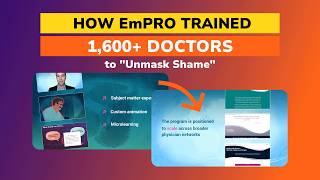 ShowcaseFeatured Microlearning ExamplesExplore
  IndustryMicrolearning for AssociationsExplore
  Case studieseLearning Case Study ExamplesExplore GuideWhat Is Microlearning? Definition, Examples and When to Use ItExplore
  The LabThe Microlearning LabExplore
  FormatInteractive Video Examples for Training and eLearningExplore
Keep exploring
ShowcaseFeatured Microlearning ExamplesExplore IndustryMicrolearning for AssociationsExplore Case studieseLearning Case Study ExamplesExplore GuideWhat Is Microlearning? Definition, Examples and When to Use ItExplore The LabThe Microlearning LabExplore FormatInteractive Video Examples for Training and eLearningExplore